
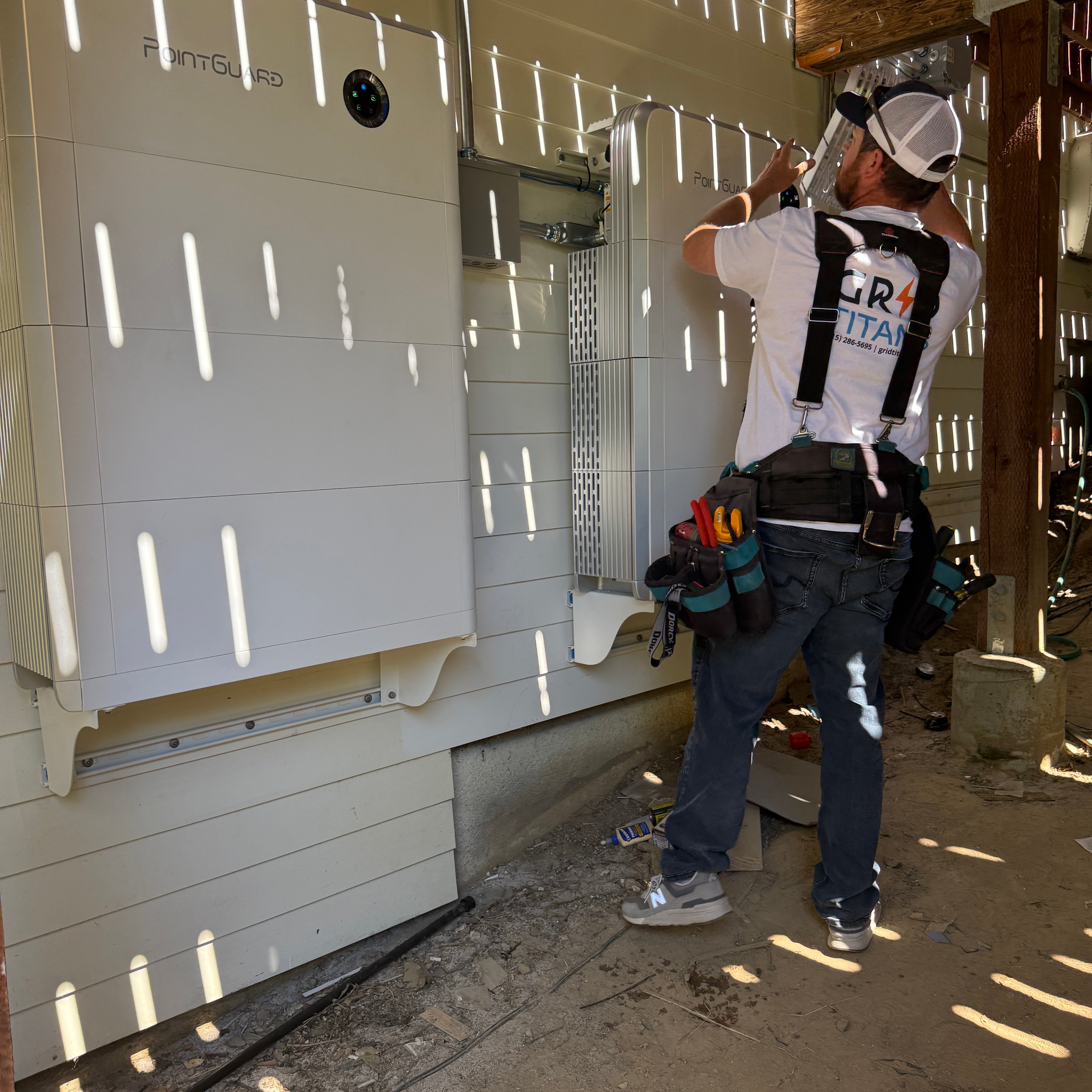
Adding Second Battery
Adding a second home battery is becoming more common as energy usage evolves. Many homeowners installed battery storage when solar systems were first added, but electrical demand today often looks very different than it did several years ago.
Electric vehicles, heat pump HVAC systems, electric water heaters, and increased device usage have shifted daily consumption patterns. As a result, some battery systems that once felt oversized now deplete earlier in the evening or cycle more aggressively overnight.
If you are thinking about adding a second battery to your home, the key question is not whether more storage is helpful. The real question is whether your current energy production and usage profile supports battery expansion in a meaningful way.
Why Home Energy Demand Has Increased
Residential electrical demand has steadily grown over the last decade. A single Level 2 EV charger can add 7 to 11 kilowatts of load during charging sessions. If that charging occurs in the evening, it may overlap with cooking, heating, lighting, and entertainment systems.
Heat pump HVAC systems also operate differently than traditional gas furnaces. They run longer cycles and rely entirely on electricity. Electric water heaters and induction cooking further increase base load.
Even background energy use has expanded. Networking equipment, home office systems, security systems, and always on electronics contribute to sustained demand.
When daily kilowatt hour consumption rises, battery discharge patterns change. A battery that previously supported the home until morning may now reach a low state of charge before sunrise.
That shift often triggers the consideration of a second home battery.
What Adding a Second Home Battery Actually Changes
A second battery increases storage capacity. It does not increase solar production and it does not reduce consumption.
If your existing battery stores 13.5 kilowatt hours, adding a second battery may double available stored energy. That means more capacity to:
• Power the home during outages
• Offset evening grid usage
• Shift usage away from peak utility rates
• Support overnight EV charging
However, storage must be balanced against production.
If your solar array produces excess energy during the day that is currently exported to the grid, a second home battery allows you to capture more of that surplus. That stored energy can then be used in the evening instead of purchasing electricity from the utility.
In that scenario, adding a second battery can reduce grid purchases.
When a Second Battery Does Not Reduce Grid Usage
A common assumption is that adding more storage automatically increases energy independence. That is not always true.
If your home already consumes most of its solar production during daylight hours, there may not be enough excess energy available to fully charge an additional battery.
In that case:
• The second battery may recharge slowly
• Stored energy may not reach full capacity daily
• Grid purchases may not decline significantly
The battery can still provide longer backup duration during outages, but its impact on monthly utility bills may be limited.
Before expanding storage, reviewing daily solar production data is critical.
Solar Production Versus Storage Capacity
Solar production determines how much energy is available to store. If your array produces 30 kilowatt hours per day and your home consumes 28 kilowatt hours, there is minimal surplus for storage expansion.
If your array produces 45 kilowatt hours and your home consumes 30, there may be substantial excess available to fill a second battery.
Adding storage without sufficient production can result in underutilized capacity.
In some cases, expanding the solar array has a greater impact on reducing grid reliance than adding a second battery. In other cases, time of use rate structures make additional storage beneficial even without production increases.
The balance between production, storage, and consumption is what determines performance.
Backup Duration and Resilience
One of the strongest reasons for adding a second home battery is extended backup time.
During a grid outage, the battery becomes the primary power source. If the home operates multiple electric loads, a single battery may only support essential circuits for several hours.
Adding a second battery can:
• Extend backup duration
• Support more circuits simultaneously
• Reduce the need for aggressive load shedding
• Maintain HVAC or EV charging during outages
For homeowners in areas prone to outages or public safety power shutoffs, storage expansion may be driven by resilience rather than bill reduction.
EV Charging and Battery Expansion
Electric vehicles significantly change household load profiles.
If overnight EV charging consistently depletes stored energy, a second home battery can provide additional buffer capacity. However, charging behavior matters.
If the EV charges during daylight hours while solar production is high, additional storage may be less necessary. If charging occurs after sunset, expanded storage becomes more valuable.
Reviewing charging timing is part of evaluating battery expansion.
Service Capacity and Electrical Review
When adding a second battery, electrical infrastructure must be reviewed.
Considerations include:
• Inverter capacity
• Existing battery compatibility
• Electrical panel capacity
• Service rating
• Interconnection limits
Most battery systems are designed for expansion, but compatibility should always be confirmed. Load calculations ensure that service capacity remains appropriate as electrification increases.
Battery expansion is not only about storage volume. It must align with system design and electrical code requirements.
Time of Use Rate Optimization
In regions with time of use utility pricing, energy costs vary throughout the day.
A second home battery can allow homeowners to:
• Store lower cost daytime solar energy
• Avoid high peak rate grid purchases
• Discharge during expensive evening periods
If peak rates are substantially higher than off peak rates, expanded storage may improve cost control even without reducing total grid consumption.
Understanding your rate structure is part of the decision.
Signs It May Be Time to Add a Second Battery
You may consider adding a second home battery if:
• Stored energy is consistently depleted before morning
• Solar exports are frequent during midday
• EV charging has increased nighttime demand
• Backup duration feels limited
• Time of use peak charges are rising
The decision should be based on data from your monitoring platform rather than general assumptions.
A Measured Approach to Storage Expansion
Homes today operate differently than they did five years ago. Electrification continues to increase load profiles, and energy usage rarely remains static.
Adding a second home battery can improve resilience, support higher demand, and optimize solar utilization. But storage works best when matched carefully to production and consumption patterns.
At Grid Titans, system evaluations begin with reviewing how your home actually uses energy today. Solar output, battery discharge history, EV charging patterns, and electrical capacity all inform whether storage expansion improves long term performance.
Expanding a battery system should strengthen system balance rather than simply add capacity. When production, demand, and storage are aligned, adding a second battery can meaningfully enhance energy flexibility and reliability.