
In a pediatric clinic in Novato, the power could go out tomorrow and nobody would panic.
Tamalpais Pediatrics runs on solar energy, backed by a battery system that keeps the lights on and the medical refrigerators operational. In the event of a full grid outage, the clinic can run on stored battery power alone for up to two days.
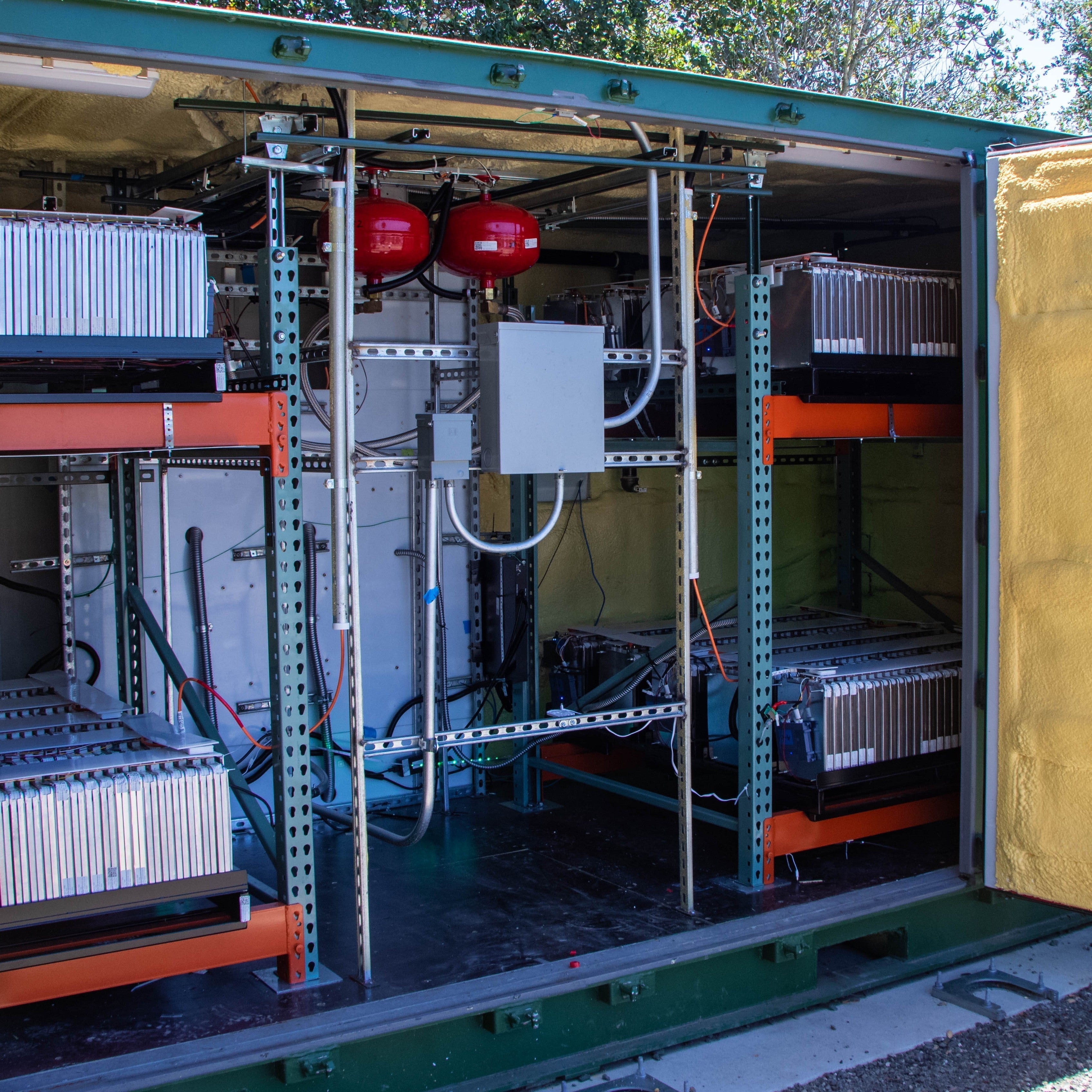
Those batteries aren't new. They're 720 repurposed modules (2880 cells) from fifteen retired Nissan Leaf battery packs that would otherwise have been destined for hazardous waste disposal. These batteries were given a second life and put back to work powering Tamalpais Pediatrics.
What makes this project especially worth talking about is how it came together.
In 2025, Petaluma-based Grid Titans and Fairfield-based Repurpose Energy partnered to make this happen. Combining Repurpose Energy's battery reclamation technology with Grid Titans' solar installation and permitting expertise enabled this innovative solution to come to life in a working medical facility. The system is expected to serve the clinic for another 7 to 10 years.
It's a project that's good for the clinic, good for the environment, and worth understanding because it might point toward something bigger.
The Problem With EV Batteries
Electric vehicles have rightly earned their reputation as a cleaner alternative to gas powered cars through their lower emissions, reduced dependence on fossil fuels, and a smaller carbon footprint. But there's a catch that doesn't get nearly enough attention: what happens to the battery when the car is done with it?
EV batteries have a lifespan of roughly 8 to 12 years. After that, they're no longer suitable for powering a vehicle, but they're far from harmless. And right now, the industry doesn't have a great answer for what comes next.
Landfills aren't an option. EV batteries contain toxic materials including lithium, cobalt, and nickel. When improperly discarded, these chemicals can leach into soil and groundwater, creating serious environmental and public health hazards. There's also the fire risk: damaged or improperly handled lithium-ion batteries are prone to rapid, uncontrollable temperature spikes that can trigger fires and even explosions. These fires burn extremely hot, are notoriously difficult to extinguish, and release toxic fumes that make them dangerous at every stage of transport and disposal.
Recycling sounds like the answer, but it's complicated. EV batteries are intricately engineered, with components that are glued or welded together and difficult to safely disassemble. Breaking them down requires highly specialized processes that are labor intensive, expensive, and can themselves generate greenhouse gas emissions if not powered by clean energy. That's a significant problem when you consider the scale of what's coming. Manufacturers are projected to produce hundreds of millions of EV batteries over the next few decades.
The public is starting to notice. A recent study commissioned by Ascend Elements found that 71% of U.S. adults say they're concerned about used EV battery disposal.
Without a better solution, and soon, the technology powering the clean energy transition risks becoming one of its biggest liabilities. Which is exactly what makes what Repurpose is doing so interesting.
Meet Repurpose
The story of Repurpose Energy starts with a simple question.
In 2011, Dr. Jae Wan Park, then a mechanical and aerospace engineering professor at UC Davis, bought his first electric car. After a year and a half of driving it around his neighborhood, he noticed the range had dropped significantly. The battery was degrading, and it needed to be replaced. At that moment, he thought,
What do you do with this half-dead battery?
That question launched more than a decade of research. Park's insight was straightforward but powerful: a battery that can no longer reliably power a car still has significant capacity left. And solar systems which generate power intermittently need somewhere to store it. Why build new batteries when there's a growing supply of capable ones being retired?
Park submitted a proposal to the California Solar Initiative to test the concept, received a small grant, and installed a 10-kilowatt-hour second-life battery system at a UC Davis residential property. That pilot program became the foundation for Repurpose Energy, which launched in 2017.
The science behind it is more intuitive than you might expect. When an EV battery retires from its first life in a car, assuming it wasn't damaged in an accident, it typically retains around 80% of its original storage capacity. Repurpose's process takes these batteries, assesses their remaining health using proprietary machine-learning algorithms, and connects multiple modules together along with battery monitoring and cooling technology to create a larger, unified storage system roughly the size of a shipping container. That system then becomes capable of storing energy generated by solar panels.
In April 2025, Repurpose became the first US-based company to achieve UL 1974 certification for EV battery repurposing. UL certification is a rigorous safety benchmark that requires demonstrating repurposed batteries meet the same performance standards as new ones. To date, the company has diverted over 5,500 battery modules from landfills and hazardous waste disposal.
How the Project Came Together
The Tamalpais Pediatrics project didn't happen overnight. It was built on years of groundwork from Repurpose demonstrating that second life battery technology could work in real commercial settings.
Repurpose Sets the Stage
Repurpose's first large-scale installation, a 300-kilowatt-hour second-life battery microgrid, was built at UC Davis in 2018. It has been operating successfully for years and generated the operational data that made subsequent projects like this one possible. From that foundation, the Tamalpais Pediatrics system was developed and deployed through a grant from the California Energy Commission's EPIC program, which focuses on advancing clean energy technologies and demonstrating innovative energy storage solutions in real world settings.
Grid Titans Crosses the Finish Line
Every complex energy project has its own path to completion, and this one was no exception. After an earlier phase of work on the system, Repurpose Energy brought Grid Titans in to carry the project forward and get it across the finish line.
From there, Grid Titans took over the project end to end. That meant bringing in new switchgear, transformers, and islanding equipment, wiring the building, and connecting the system to PG&E's grid. The team worked through the technical details of the project, secured every regulatory approval needed to bring it online, and did it all while meeting a hard deadline for the utility interconnection agreement.
Tamalpais Pediatrics Takes the Leap
That confidence had to extend to the clinic itself. Tamalpais Pediatrics already had a strong interest in sustainability and solar energy, and was genuinely enthusiastic about the environmental case for repurposed batteries. They were open to being early adopters of innovative technology that aligned with their values.
That said, operating a battery energy storage system in a medical setting meant safety was non-negotiable. The local fire department and city had strict safety requirements that resulted in significant project delays and multiple rounds of review. It was a difficult and time consuming process for all parties. But every required safety measure was fully implemented, and the collaboration with local authorities was thorough.
It was worth it. Since installation, the system has been operating without issue.
The numbers are beginning to tell their own story. In the first two months of operation, the system has been saving Tamalpais Pediatrics approximately $1,000 per month in energy costs, plus an additional $500 per month in NEM credits from solar generation fed back to the grid. That’s roughly $1,500 in monthly savings from a system powered by batteries that would otherwise have been headed for hazardous waste disposal.
Beyond the operational and financial upside, the microgrid protects something far more critical: the clinic's vaccine supply. Vaccines have to stay within a strict temperature range, and even a short outage can spoil an entire stock forcing the clinic to discard doses and reschedule appointments until new supply arrives. For families, that can mean real delays in getting kids protected on schedule.
With the microgrid now in place, Tamalpais Pediatrics can keep critical refrigeration running through a grid outage, protecting its vaccine supply and keeping care on track for the young patients who depend on it. Dr. Nelson Branco, MD, FAAP, one of the pediatricians at Tamalpais Pediatrics, sees the project as part of a bigger commitment to the community's future:
"As pediatricians, we are always thinking about the future and how we can make sure that kids are growing up in a healthy environment. This project was a perfect opportunity for us - not only can we keep taking care of the kids in a power outage, we generate enough power day-to-day for our clinic and we share clean solar energy with our community. It's a great way for us to show our community that we care about the future and kids in many ways."
The California Energy Commission's investment in this project wasn't just about one clinic's energy bill. It was about proving that second-life battery technology works safely, reliably, and economically in a demanding real world environment and about what that reliability makes possible. For Tamalpais Pediatrics, it means life saving vaccines stay protected and young patients stay on schedule for the care they need, no matter what the grid is doing.
Looking Ahead
The Tamalpais Pediatrics project is one data point in what Repurpose and Grid Titans both believe is a much larger story.
Repurpose is focused on scaling what worked here: bringing second-life battery storage to commercial and industrial customers in the 100 kilowatt-hour to multi-megawatt range. The target list reads a lot like the kinds of places your community depends on every day: office buildings, retail centers, clinics, schools, light industrial facilities. Properties that pay significant energy bills, need backup power resilience, and increasingly want greater energy independence. Looking further ahead, Repurpose also sees strong opportunities in EV charging infrastructure, microgrids, and distributed energy systems as that market matures.
For Grid Titans, projects like this one represent exactly the kind of work we came here to do: bringing together solar installation, battery storage, and the permitting and grant expertise to make these systems financially viable for the businesses and organizations that need them most.
The math on all of this only gets more compelling over time. Hundreds of millions of EV batteries are expected to be retired over the coming decades. The raw material for a cleaner grid is already out there, already manufactured, already waiting. The question is whether we build the infrastructure to put it to use before it becomes a problem.
As Dr. Park puts it
"Every battery we successfully repurpose extends the life of valuable materials, reduces waste, and lowers the environmental footprint of energy storage. It's one of the most practical ways to accelerate the clean energy transition."
It's hard to argue with that especially when you've seen it working.
Sources:
https://blog.ucs.org/jessica-dunn/are-ev-batteries-recyclable/
https://invinity.com/recycling-matters-shining-a-light-on-a-growing-battery-waste-problem/
https://engineering.ucdavis.edu/engineering-progress/charging-ahead