PG&E Power Shutoffs Are Starting Earlier Every Year
Here's What That Means for North Bay Homeowners
If you've lived in Marin, Sonoma, or Napa County for any length of time, you know that the beautiful summer weather comes with a downside.The wind picks up, the air gets dry, and your phone buzzes with a PG&E alert warning that your power might be shut off in the coming days. It's become a familiar part of life in Northern California but lately, these Public Safety Power Shutoffs (PSPS) aren't just happening more frequently. They're starting earlier and earlier in the year.
What Is a PSPS and Why Does PG&E Do It?
A Public Safety Power Shutoff is a planned, preemptive outage that PG&E triggers when weather conditions create a high risk of wildfire. The specific combination they watch for is dangerous: high winds, low humidity, and dry vegetation. When those three factors align, downed or damaged power lines can spark fires that spread with terrifying speeds.
PG&E first introduced PSPS events in 2019 after its equipment was linked to several devastating fires, including the 2018 Camp Fire. The idea is straightforward: if there's a meaningful risk that the grid could start a fire, shut the grid off until the danger passes.
It's an important safety precaution, and something worth tracking for homeowners that reside in areas where these shut offs are frequent.
The Trend: Shutoffs Are Getting Earlier Every Year
When you line up the first PSPS event of each year going back to 2023, a clear and striking pattern emerges:
|
Year |
First PSPS Event |
Month |
|
2023 |
August 30 |
Late Summer |
|
2024 |
July 2 |
Early Summer |
|
2025 |
June 19 |
Early Summer |
|
2026 |
May 17 |
Late Spring |
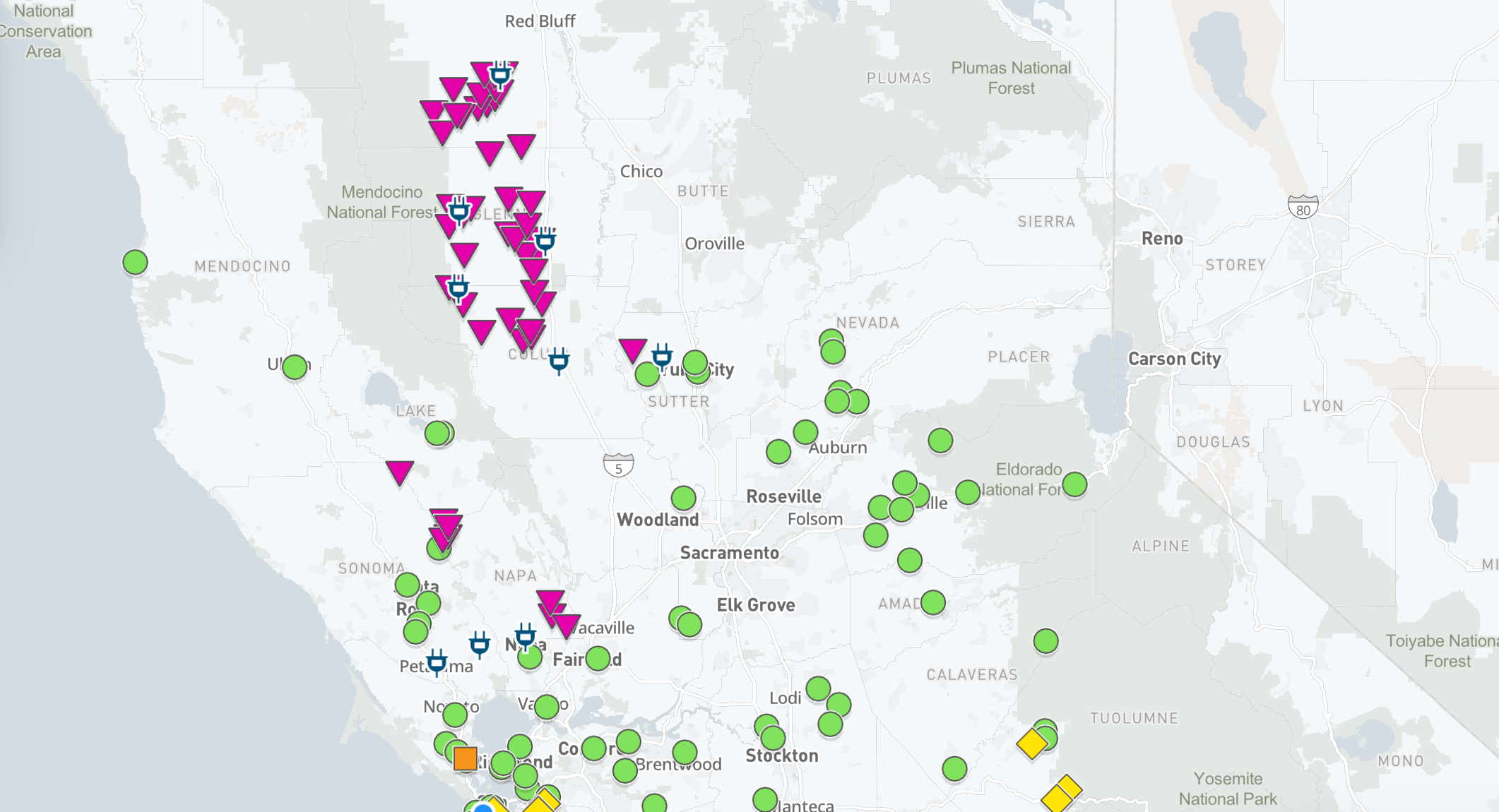
In 2023, PG&E's first shutoff of the year came at the end of August, the heart of traditional fire season. By 2024, the first event had moved up to early July. In 2025, it crept to mid June. And in 2026, PG&E issued its first shutoff warning of the year in mid-May, before summer had even officially started, with Sonoma and Napa counties among those affected. In fact, as of the time of this writing (June 11, 2026), PG&E has already triggered a second round of shutoffs affecting hundreds of customers in Napa and Sonoma counties.
That's a shift of roughly three and a half months in just four years.
PG&E's own communications team acknowledged during the June 2025 event that the early timing was notable, noting that "it's also a little bit early to see these types of winds, honestly."
What's Driving This Change?
The drivers behind earlier fire seasons are well-documented: warming temperatures, persistent drought conditions, and vegetation that dries out sooner in the year than it used to. The traditional fire season, once associated with September and October, has effectively become a year round consideration in parts of California.
For PG&E, that means their weather monitoring and PSPS decision making has to start earlier. The utility now runs sophisticated meteorological operations year round, and when conditions warrant, they pull the trigger.
An additional concern this year is what meteorologists have called the “Godzilla El Nino”, a potentially record strength El Nino event that is currently developing in the Pacific. Most people associate El Nino with more rainfall, and while that can be accurate, the effects of a Godzilla El Nino event in California are more complex.
The winter of 2025-2026 was one of the warmest recorded, and the Sierra snowpack is below average. This matters because snowpack acts as a natural fire buffer by keeping forests and vegetation hydrated into summer. When snow disappears early, the forests dry out sooner, which extends the fire season by weeks or months.
Climate scientist Daniel Swain has noted that the combination of the record warm winter temperatures, historically low snowpack, and the developing El Niño pattern is setting the stage for a potentially severe 2026 wildfire season. CAL FIRE's own forecasts back this up, projecting above normal large fire activity across both Northern and Southern California operations by July and August 2026. So while the Godzilla El Nino might bring a wetter winter, it’s also contributing to a drier, more fire prone summer this year.
The result for homeowners is a longer window of vulnerability. Where once you might have needed to think about power disruptions for a few months in the fall, that window now runs from late spring through late autumn, potentially six months or more of elevated risk each year.
What a Shutoff Actually Means for Your Household
During a PSPS event, the power goes out for everyone in the affected area. Outages typically last from a handful of hours up to three days, though they can extend longer if conditions don't clear. During that time:
⏺ Refrigerated food and medication are at risk
⏺ Home medical equipment may not function
⏺ Well pumps stop working
⏺ HVAC systems go offline
⏺ Home security systems may fail
⏺ Routers and internet go dark, affecting remote workers
⏺ Electric vehicle owners can't charge
A power outage can be an inconvenience for some folks, but for families with medical needs or anyone who works from home, a multi day outage is a genuine disruption that requires planning and preparation.
The Solution That Handles It All: Home Solar + Battery Storage
Fortunately, most PSPS events are planned in advance. PG&E typically notifies customers 48 hours or more before shutoffs begin which gives homeowners with solar and battery storage time to prepare.
A properly sized home solar and battery system does two things that matter in this context. First, during normal times it reduces your dependence on PG&E's grid, which means lower electricity bills, especially during the summer months when solar production is at its peak and PG&E's Time-of-Use rates are at their highest.
Second, when the grid goes down for a PSPS event, the battery kicks in automatically, keeping your essential loads like your refrigerator, lights, internet, medical equipment running without interruption.
The key distinction here is that a standard solar-only system will shut down during a PSPS, just like your regular grid power. Solar panels connected to the grid are required by utility rules to turn off during outages to protect repair crews. It's only when you pair solar with battery storage that you maintain power through a shutoff.
How Long Can a Home Battery System Actually Keep You Running?
This is the question most homeowners ask first, and the honest answer is: it depends on your system size and how much power you're drawing.
At Grid Titans, we install three of the leading battery systems on the market:
⏺ Tesla Powerwall 3 stores 13.5 kWh of usable energy per unit and can output up to 11.5 kW continuously. A typical home running essential loads (refrigerator, lights, some outlets, internet router) might draw 1–2 kW, meaning a single Powerwall 3 could carry you through 8 to 12+ hours of nighttime or cloudy conditions. And when the sun comes out the next morning your battery will start charging again.
Many homeowners install two Powerwalls, which effectively doubles that capacity. Paired with solar panels generating power during the day, a two-Powerwall system can sustain a home through a multi-day PSPS event with careful energy management.
⏺ Enphase IQ Battery 5P is a modular system. Each unit stores 5 kWh, and they can be stacked together to build exactly the capacity your home needs, and be mounted on a wall to preserve your footprint space. A three-unit stack gives you 15 kWh, a four-unit stack gives you 20 kWh. Enphase's whole home energy system integrates tightly with their microinverter based solar panels, giving you exceptional monitoring and control through the Enphase app. For homes that want flexibility and scalability, Enphase is a strong choice.
⏺ Sigenergy is a newer but rapidly growing system that offers an all in one approach handling solar, battery, EV charging, and home energy management in one integrated platform. Sigenergy batteries are modular, they come in stacks of 6kWh and 9kWh, and can scale from 10 kWh up to 100+ kWh for larger homes or those with significant EV charging needs.
In all cases, the battery works together with your solar panels to recharge during the day. If a PSPS event lasts three or four days, as some do, solar production during daylight hours keeps the battery topped up, so you're not just drawing down a fixed reserve. You're running a miniature off grid power plant right on your roof.
A Smarter Way to Think About It
A home solar and battery system isn't just a backup generator. It's working for you 365 days a year by reducing your electricity costs during peak summer months, potentially earning credits through programs like NEM 3.0 and California's SB 913 battery incentive, and providing protection when PG&E's grid goes down.
Given that the first shutoff of the year is now arriving in May, and given that the window of risk appears to be growing, there's a real argument for thinking about this as essential home infrastructure, not a luxury upgrade.
If you'd like to understand what a solar and battery system would look like for your specific home, Grid Titans offers a no-pressure energy assessment. We serve homeowners throughout Marin, Sonoma, Napa, and Mendocino counties, and every system we design is tailored to how you actually use energy.
Sources:
-
CBS News San Francisco — PG&E begins PSPS in Northern California, August 30, 2023
-
Press Democrat — June 11, 2026 PSPS event (Napa and Sonoma counties)
-
Lodi 411 — "Godzilla El Niño" and Northern California wildfire risk, 2026