Main Panel Upgrades
Main electrical panel upgrades are no longer just about replacing outdated equipment. As homes rapidly electrify, energy demand is increasing faster than most legacy electrical systems were designed to handle. Between electric vehicles, battery storage, solar integration, and the rise of AI-powered devices, the main service panel has become the foundation of a future-ready home.
At Grid Titans, we approach panel upgrades as long-term infrastructure planning. The decisions made today affect how safely and efficiently your home can support multiple EVs, advanced energy management systems, and emerging technologies for decades to come.
Why Main Panel Upgrades Are Becoming More Common
Many homes built before the 1990s were designed for a completely different electrical lifestyle. Gas appliances were standard, EVs did not exist, and energy usage was predictable and relatively low.
Today, homeowners are adding Level 2 EV chargers, electric heat pumps, induction ranges, battery systems, and smart home technology. These loads are often continuous and high demand, which pushes older panels beyond their safe operating limits.
A main panel upgrade increases capacity, improves safety, and allows your electrical system to evolve instead of becoming a bottleneck.
Preparing for Two EVs and the Rise of AI Power Demand
The future of residential energy use is not hypothetical. Many households are already planning for two electric vehicles, each capable of drawing 40 to 60 amps continuously during charging. Add AI-driven devices, home servers, advanced security systems, and energy management platforms, and electrical demand increases significantly.
Homes that want true flexibility often benefit from higher-capacity service configurations, especially when EV charging, batteries, and solar are designed together.
Understanding 320 Amp Continuous Service with Dual 200 Amp Panels
One of the most future-proof residential configurations is a 320 amp continuous service feeding two split 200 amp panels. This setup allows loads to be distributed intelligently rather than forcing everything through a single panel.
This configuration is especially valuable for homes planning battery storage and EV charging because it supports advanced load management. Batteries can be isolated or prioritized, EV chargers can be balanced across panels, and critical loads can be protected during outages.
It also allows room for expansion without requiring another full service upgrade later.
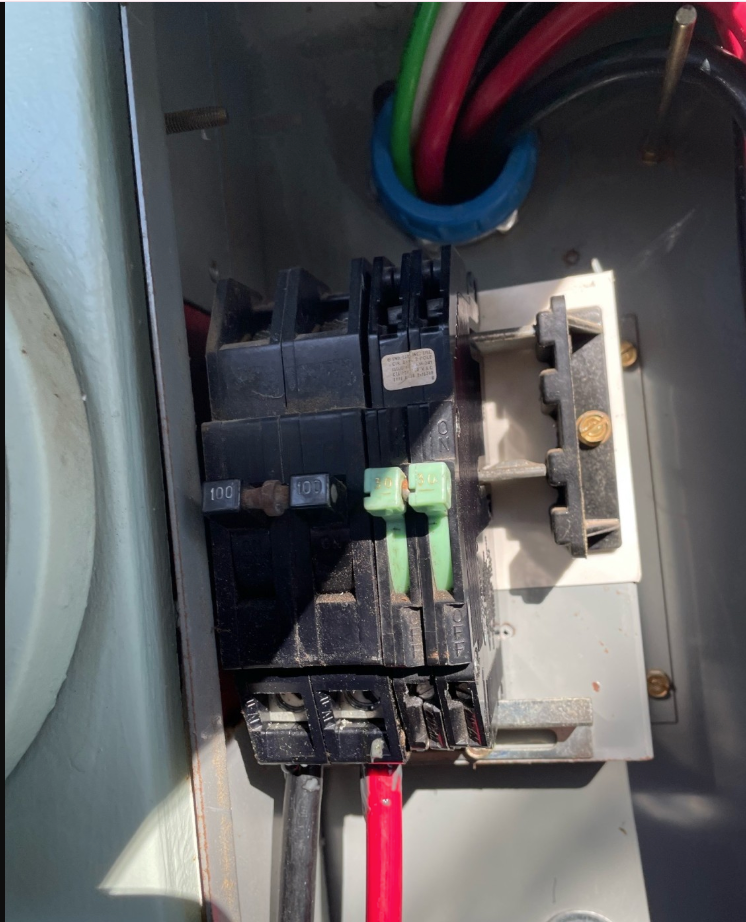
Unsafe Electrical Panels That Require Replacement
Some electrical panels are not just outdated but are considered unsafe by modern standards and insurance providers.
Panels manufactured by Zinsco are known for breakers that fail to trip properly, increasing fire risk.
Panels produced under the Sylvania name often share similar internal design issues and are frequently flagged during inspections.
These panels typically must be replaced to meet current electrical code and utility requirements before any new loads such as EV chargers or batteries can be added.
Underground vs Overhead Electrical Service
The type of utility service feeding your home has a major impact on panel upgrade complexity.
Overhead services are generally more straightforward to upgrade. The utility connection is accessible, and service equipment changes are typically faster.
Underground services introduce more variables. Trenching, conduit routing, driveway or landscaping impacts, and coordination with the utility all add complexity. In some cases, utility-owned conduits or transformers limit design flexibility.
Each home is different, and no two underground upgrades are identical.
Utility Coordination and Engineering Fees
Many homeowners are surprised to learn that some costs associated with a panel upgrade are controlled by the utility and cannot be avoided.
Utilities such as Pacific Gas and Electric Company may require engineering reviews, load studies, or service design approvals before authorizing certain upgrades.
These engineering fees are not contractor markups. They are utility-imposed requirements designed to protect grid stability and safety. While frustrating, they are sometimes necessary to begin or complete a project.
Understanding this early prevents delays and unexpected costs.
Permits, Inspections, and Code Compliance
Main panel upgrades require permits and inspections to ensure compliance with national and local electrical codes. Modern panels must meet rapid shutdown readiness, grounding requirements, arc fault protection, and load calculation standards.
Proper permitting also protects homeowners by ensuring insurance coverage remains valid and future home sales are not impacted by unpermitted electrical work.
Why There Is No Standard Price for Panel Upgrades
Panel upgrade pricing varies widely because every home presents a unique set of variables. Service size, panel location, utility requirements, grounding conditions, trenching needs, and existing wiring all affect scope and cost.
This is why reputable contractors avoid flat pricing without an evaluation. A site-specific assessment is the only way to design a safe and compliant upgrade.
Panel Upgrades as Long-Term Energy Infrastructure
A main panel upgrade is not just a compliance item. It is an investment in your home’s ability to adapt to future energy needs.
Homes with modern electrical infrastructure are better positioned for solar expansion, battery storage, multiple EVs, and advanced energy management. They are safer, more efficient, and more valuable over time.
At Grid Titans, we design panel upgrades with the future in mind so homeowners are not forced into repeated electrical work as technology evolves.
Final Thoughts
Main panel upgrades are becoming a cornerstone of modern home electrification. Whether driven by safety concerns, EV adoption, battery storage, or future AI-powered energy systems, upgrading your electrical service ensures your home is ready for what comes next.
Planning ahead saves money, reduces disruption, and creates a foundation that supports energy independence for years to come.