Why Your Solar Panels Might Not Be Working and What It Usually Means
Few things are more stressful for a homeowner than opening a solar monitoring app and seeing little to no production. It can feel like something is broken, especially when electric bills suddenly increase or the system appears offline.
The good news is that in many cases, solar panels are not actually “broken.” Solar systems are made up of several components, and issues are often related to settings, communication, or external factors rather than failed equipment.
At Grid Titans, we help homeowners understand what is happening before assuming the worst. Below are the most common reasons a solar system may appear not to be working and what they usually mean.
First, What “Not Working” Usually Means
When homeowners say their solar panels are not working, they typically mean one of three things.
The monitoring app shows zero or very low production
The system appears offline or disconnected
Electric bills are higher than expected
Each of these situations has different causes, and many do not involve a system failure.
The Monitoring App Is Offline
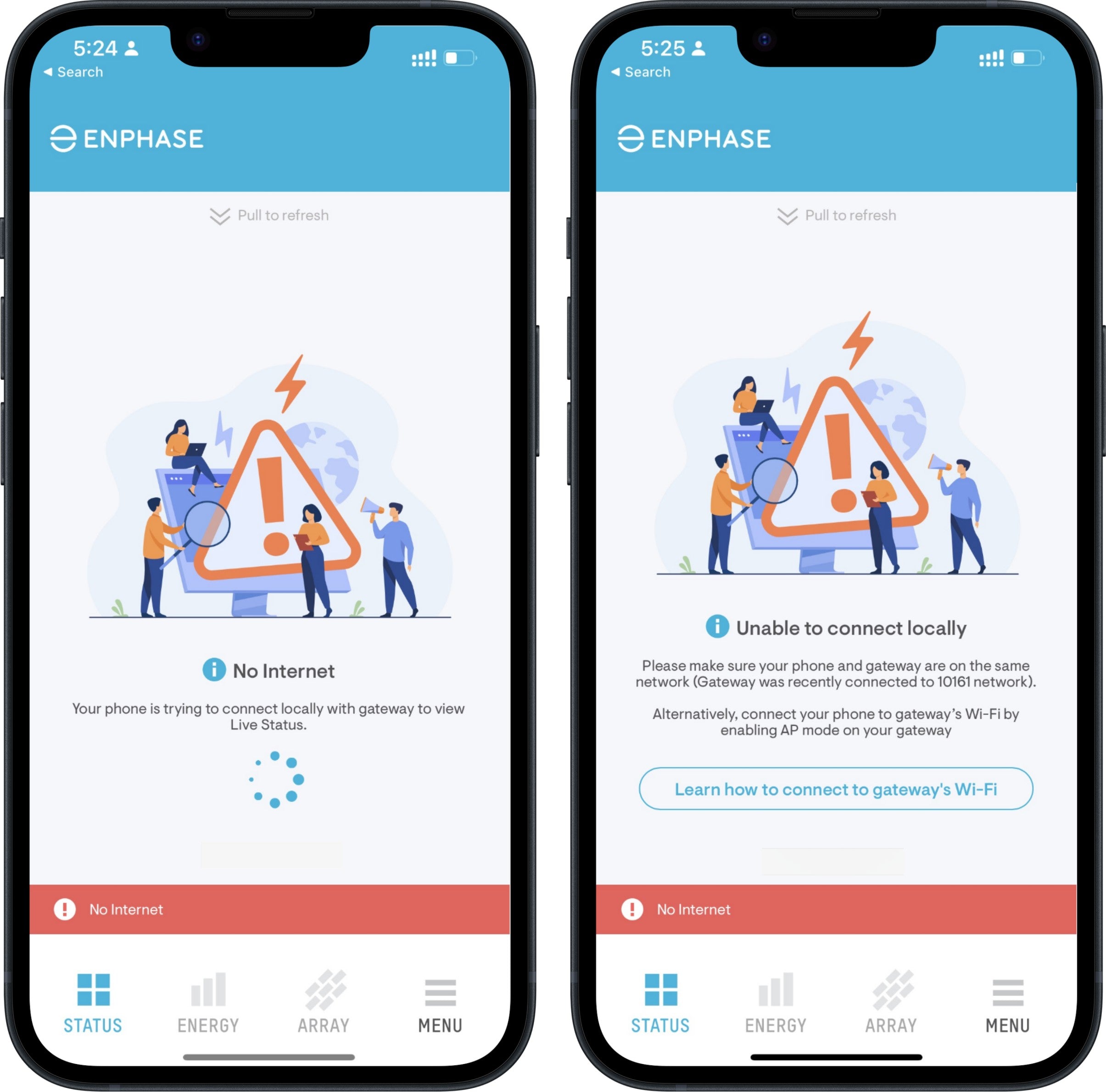
One of the most common issues is a loss of communication between the solar system and the internet.
Solar monitoring relies on WiFi or Ethernet connections. If the home’s internet changes, the router is replaced, or the signal weakens, the system may stop reporting data even though it is still producing power.
In systems using platforms from Enphase Energy, SolarEdge, or Tesla, a disconnected app does not necessarily mean the solar panels are not generating electricity.
It often means the monitoring gateway cannot communicate with the network.
The Main Breaker or Solar Disconnect Is Off
Solar systems include safety disconnects and breakers. These can be turned off accidentally during electrical work, inspections, storms, or even by someone unfamiliar with the system.
If a solar breaker or disconnect is off, the system will stop producing power entirely.
This is one of the first things a professional will check, and it is also one of the easiest fixes when identified early.
The Utility Grid Is Down or Restricted
Solar systems are required to shut down automatically during utility outages for safety reasons. This protects utility workers and prevents backfeeding power into the grid.
If the grid is down, your solar system will stop producing unless it is paired with a battery or backup configuration.
Even when the grid is up, utilities such as Pacific Gas and Electric Company can temporarily restrict export or require system updates that affect how production appears in monitoring apps.
Weather and Seasonal Changes Affect Production
Solar production changes throughout the year.
Shorter winter days, cloud cover, smoke, dust, and debris can all reduce output. Panels may still be working correctly but producing less energy than during peak summer months.
Many homeowners expect consistent production year-round, but seasonal variation is normal and expected.
Inverter or System Faults
The inverter is the component that converts solar energy into usable electricity. If an inverter detects a fault, it may shut down to protect the system.
Microinverter systems may show partial production loss if one panel or inverter has an issue, while string inverter systems may show a larger drop if a single fault affects the entire array.
Error codes in the monitoring app often provide clues, but professional diagnosis is recommended before attempting any reset.
Utility Permission or Interconnection Issues
In some cases, solar systems are installed but not fully authorized to operate.
If final utility permission to operate has not been granted or has been temporarily suspended, the system may be limited or shut down even though all equipment is installed.
This situation is more common than many homeowners realize, especially after system modifications or ownership changes.
Dirty Panels or Physical Obstructions
Solar panels require sunlight to function properly.
Heavy dirt buildup, leaves, bird droppings, or new shading from tree growth can reduce production significantly. While panels do not need constant cleaning, excessive buildup can affect performance.
Physical damage is rare but should be inspected by a professional if suspected.
Electrical Panel or Service Issues
If the main electrical panel has issues, the solar system may shut down as a safety measure.
Older or unsafe panels can interfere with normal operation, especially as homes add EV chargers, batteries, or additional electrical loads.
This is why electrical infrastructure and solar performance are closely connected.
When Higher Electric Bills Cause Confusion
Sometimes the solar system is working, but electric bills increase due to higher usage.
EV charging, electric heating, home offices, and seasonal changes can all increase consumption beyond what the solar system was designed to offset.
Monitoring both production and usage together provides a clearer picture of what is actually happening.
What You Should Not Do
Homeowners should never open inverters, remove covers, or attempt electrical repairs themselves.
Solar systems involve high voltage and should only be serviced by qualified professionals.
If something looks wrong, the safest step is to schedule an inspection rather than attempting a fix.
When to Call a Professional
If basic checks do not resolve the issue, a professional evaluation can determine whether the problem is related to communication, configuration, electrical infrastructure, or equipment.
Most solar issues are diagnosable without invasive work when handled by experienced technicians.
Final Thoughts
When solar panels appear to not be working, the cause is often simpler than expected. Communication issues, settings changes, grid conditions, or normal seasonal variation account for many concerns.
Understanding how your system works helps remove uncertainty and prevents unnecessary stress. Solar is a long-term investment, and occasional troubleshooting is part of ownership.
At Grid Titans, we believe homeowners deserve clear answers and honest assessments so they can trust their energy systems and know when action is truly needed.