
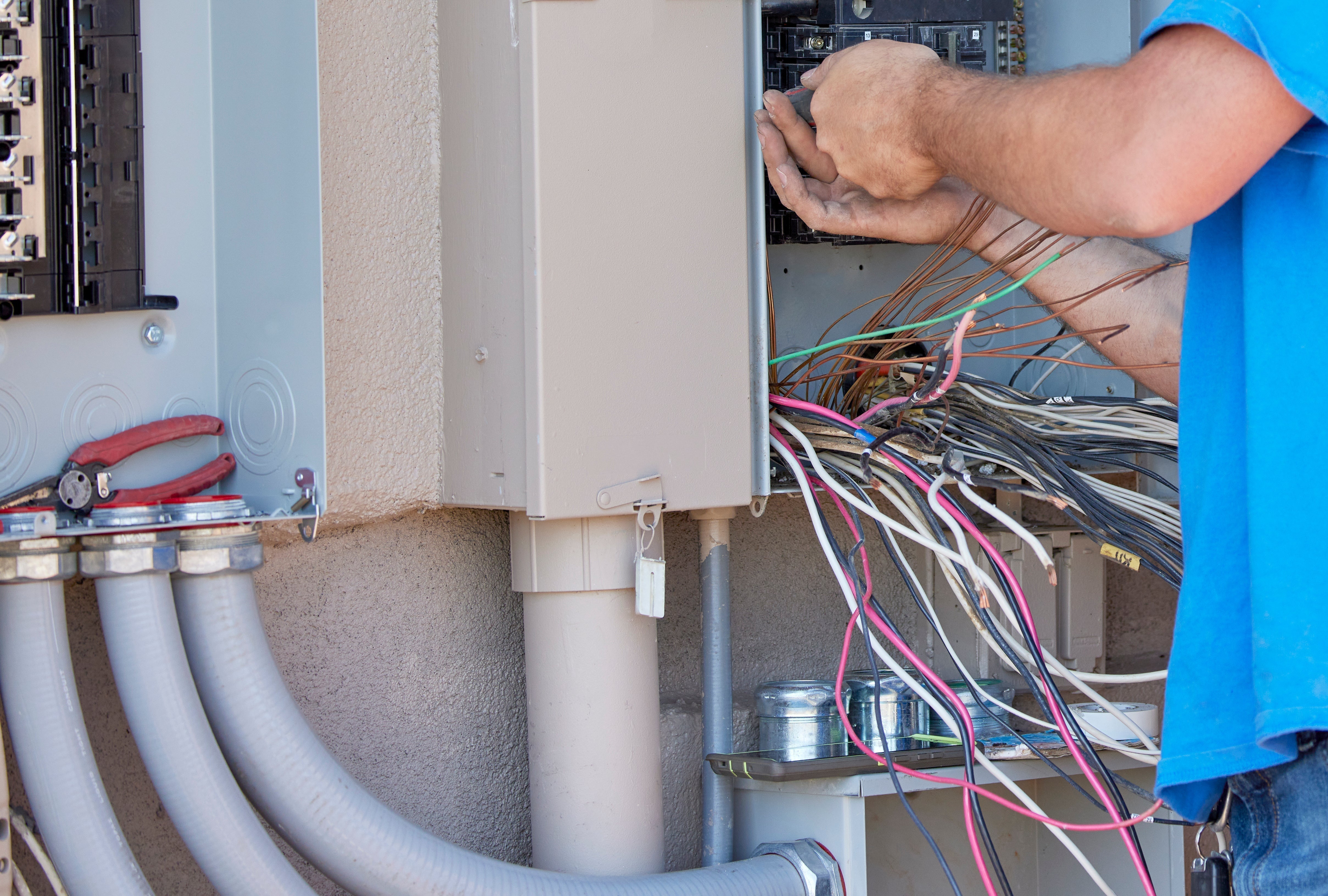
Main Panel Upgrades: Understanding 100A to 400A Electrical Service Options
Main electrical panel upgrades are no longer one-size-fits-all. As homes adopt electric vehicles, battery storage, solar, and AI-driven technologies, understanding your electrical service size is essential. The panel you choose determines how safely your home can operate today and how easily it can grow in the future.
At Grid Titans, we help homeowners understand all available service options from 100 amps through 400 amps, including when each makes sense and how to plan intelligently for long-term energy needs.
What Electrical Service Size Actually Means
Your electrical service rating determines how much power your home can safely draw at one time. This includes everything from lighting and appliances to EV chargers, batteries, and heating systems.
Service size is not about how much electricity you use monthly. It is about how much power your home can handle simultaneously without overheating, tripping breakers, or creating safety hazards.
100 Amp Electrical Service
A 100 amp service is common in older homes and small residences built when electrical demand was minimal.
This service size may support basic household loads but is often insufficient for modern electrification. Adding an EV charger, heat pump, or battery system frequently exceeds safe capacity.
Homes with 100 amp service are typically candidates for an upgrade if any major electrical additions are planned.
125 Amp Electrical Service
125 amp service offers a slight increase over 100 amps but still has limitations. While it may accommodate modest upgrades, it often lacks the flexibility needed for EV charging or future expansion.
This service size is rarely recommended for homes planning long-term electrification.
200 Amp Electrical Service
A 200 amp service is the modern residential standard and the most common upgrade choice. It supports most households with one EV charger, electric appliances, and moderate future expansion.
Many homes with solar, battery storage, or a single EV operate successfully on 200 amp service when systems are designed carefully.
However, as households add a second EV or larger battery systems, even 200 amps can become restrictive.
320 Amp Continuous Service with Dual 200 Amp Panels
A 320 amp continuous service is often misunderstood. It does not mean 320 amps of usable power in the same way a single panel does.
This configuration supplies two separate 200 amp panels fed by a single 320 amp meter base. The continuous rating reflects utility standards for sustained load rather than peak theoretical capacity.
This setup allows loads to be split intelligently. EV chargers, batteries, and major appliances can be distributed across panels, enabling advanced load management and future flexibility.
This configuration is ideal for homes planning multiple EVs, battery storage, solar expansion, or significant electrification without stepping into full commercial-grade service.
400 Amp Electrical Service
A true 400 amp service provides the highest residential capacity available and is often used in large custom homes, estates, or properties with extensive electrical infrastructure.
This option supports multiple EV chargers, large battery systems, workshops, guest units, and advanced energy management without compromise.
400 amp service typically requires additional utility coordination, larger conductors, and sometimes utility-side upgrades.
Unsafe Electrical Panels That Must Be Replaced
Some homes require panel upgrades not for capacity but for safety.
Panels manufactured by Zinsco are known for breakers that fail to trip properly, increasing fire risk.
Panels branded under Sylvania often share similar internal defects and are frequently flagged during inspections.
These panels generally must be replaced before EV chargers, batteries, or solar can be installed safely and legally.
Overhead vs Underground Utility Service
The type of utility connection feeding your home impacts the complexity of any service upgrade.
Overhead services are typically simpler to modify and faster to complete.
Underground services introduce more variables including trenching, conduit routing, landscaping disruption, and coordination with the utility. Each underground upgrade is unique and requires site-specific planning.
Utility Engineering and Non-Avoidable Fees
Some panel upgrades require utility engineering reviews, transformer analysis, or service redesign. These costs are set by the utility and cannot be bypassed.
Utilities like Pacific Gas and Electric Company may require engineering approvals before authorizing higher-capacity service or multiple panels.
These fees are not contractor charges but utility requirements necessary to protect grid stability.
Why Panel Upgrade Costs Vary So Widely
There is no standard price for a panel upgrade because no two homes are the same. Service size, panel location, grounding conditions, utility requirements, trenching needs, and local jurisdiction rules all influence scope.
This is why accurate pricing requires an on-site evaluation and load analysis.
Planning for AI, EVs, and the Future
AI-driven home technology, energy monitoring, smart appliances, and vehicle electrification are rapidly increasing baseline electrical demand.
Homes designed today should anticipate two EVs, battery storage, and high-load devices rather than reacting later with costly retrofits.
Upgrading the main panel is not just about compliance. It is about building energy infrastructure that adapts as technology evolves.
Final Thoughts
Understanding electrical service options from 100 amps to 400 amps empowers homeowners to make informed decisions instead of reactive ones.
A properly planned panel upgrade supports safety, flexibility, and long-term energy independence. At Grid Titans, we design electrical systems that grow with your home and your future energy needs.